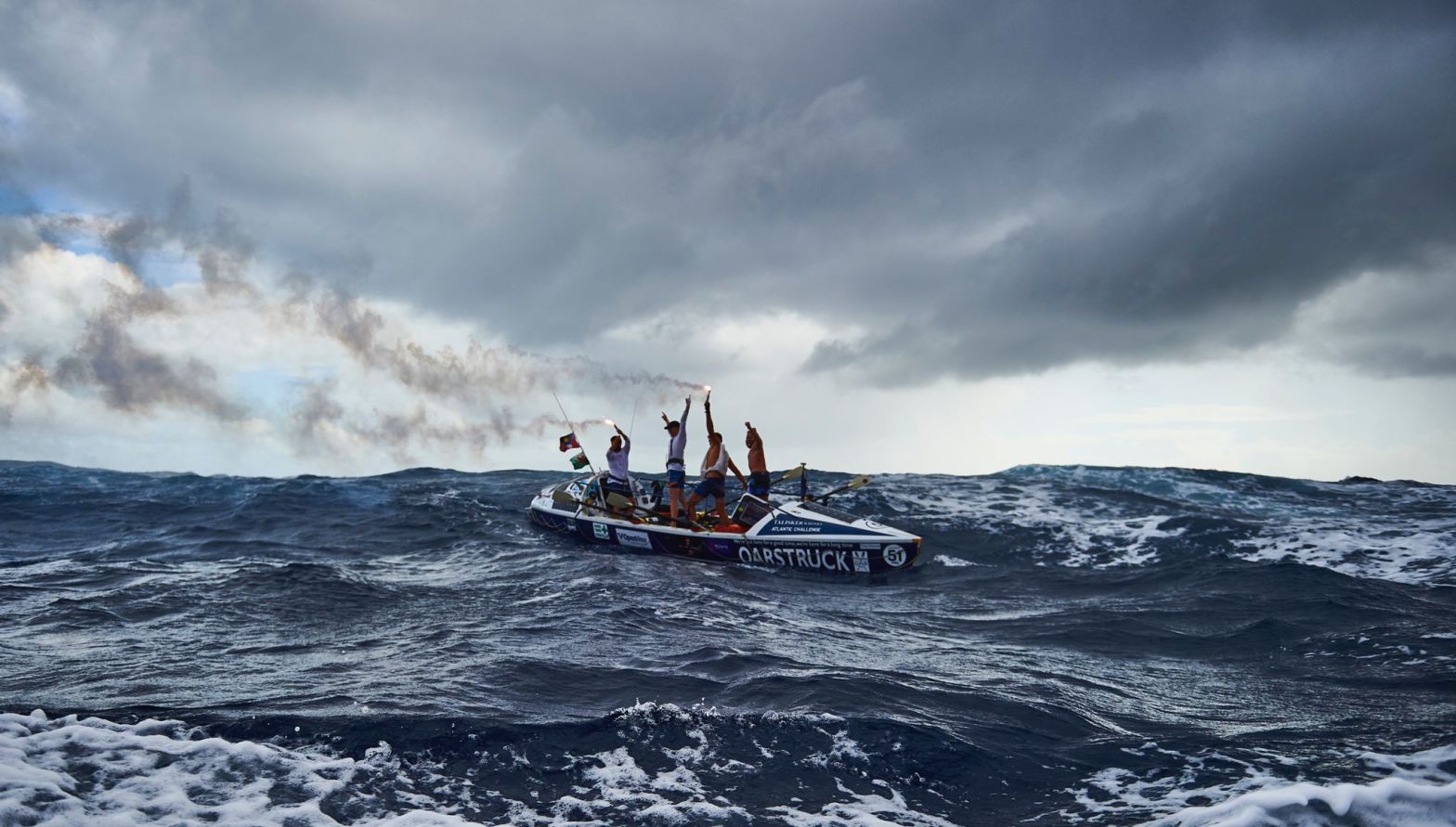
Every year, around thirty crews of brave (or just bonkers) people from rowing novices to the battle-hardened professionals attempt to make it 3,000 miles across the Atlantic Ocean from La Gomera in the Canary Islands to Antigua in the Caribbean.
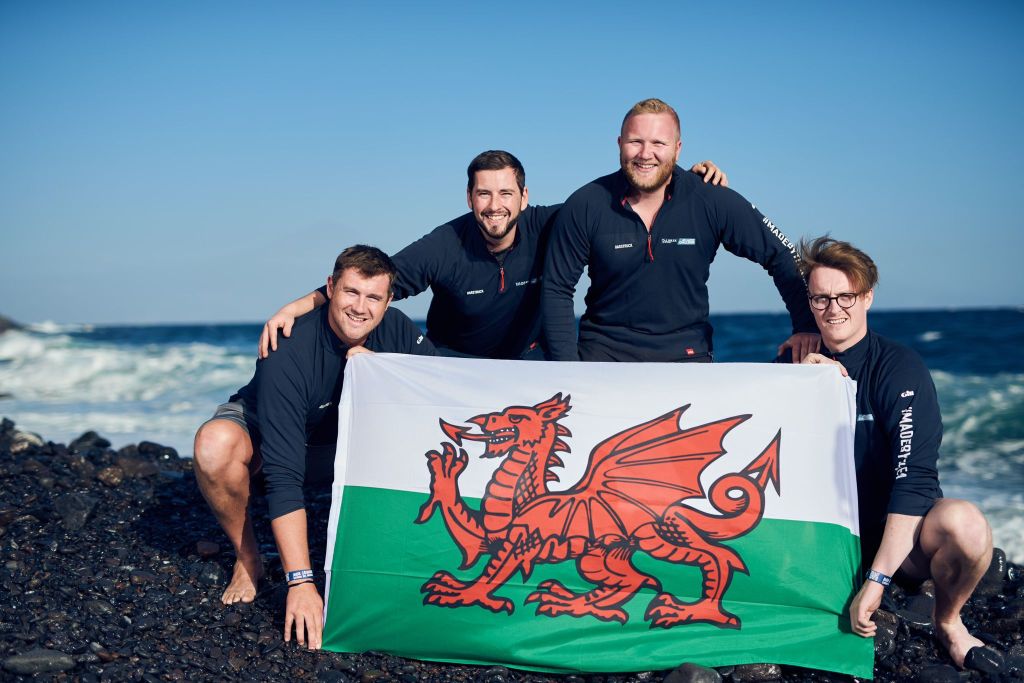
Monty Williams and his school friends from Caerleon in South Wales decided to tackle this monumental challenge whilst raising money for Diabetes UK despite having no rowing experience at all.
“I was driving home from work one day and I had a missed call from Joel (his crewmate) so I rung him back when I got home and he said do you want to row across the ocean… I didn’t even know what that meant, I didn’t know you could even row across the English Channel let alone row across the Atlantic Ocean”.
For a quartet with no boat, equipment, or money the logistical challenges of the row were massive. With Williams admitting the challenges “consumed his whole life”. Oarstruck had to fork out 20,000 euros to enter the race as well as north of £30,000 for the boat which they purchased from a team that had successfully crossed a couple of years previously which meant the team spent months fundraising to pay their monthly payments on the boat.
“The first time we got in the boat we took it down to Cardiff Bay and just rowed round and round in circles for 24 hours which was a bit of an eye opener” he said.
In terms of physical preparation, the boys had to put on as much weight as possible to counteract the weight they would lose from 55 days of rowing at sea. “It’s not about being fit and lean but more about being as strong and robust as possible”.
Williams praised the race organisers of the Atlantic Challenge, for giving them all the advice they need. “They give you the minimum requirements for hours at sea and hours at night at sea as well a first aid at sea course, a navigation course and a radio license. That’s why they have a lot of successful crossings because they won’t let you leave unless you are fully prepared”.
“A man called Tony Roberts from Chepstow, who we met during one of our fundraising days at Caerleon Arts Festival was a massive help for us. He came to talk to us and found out straight away we didn’t know what we were doing. He had done some rowing and sailing before and he became our sort of team leader and mentor. He came with us on the training rows and even came out to Antigua, so we owe a lot to Tony”.
When describing the most difficult parts of the journey, Williams said the relentlessness of the 2-hour slots took its toll leading to sleep deprivation, fatigue, and hallucinations.
“I was waking up in the middle of the night and I didn’t know where I was, I was trying to grab something above me hitting the roof of the cabin. Your mind can go pretty crazy before your body starts to adjust”.
“You can prepare yourself physically, but the mental challenge is so much harder. You’ve got to make sure you’re getting up on time ready for your shift otherwise the boys before you will be getting cranky and then things will start to blow up”.
“The adrenaline carries you through the start of the challenge and then once you hit halfway (or what you thought was halfway) you just start thinking of being home and a nice bed and food and that motivates you to keep going”.
The team had a few close shaves over the course of their crossing, plagued by stormy weather.
“You have to position yourselves with the wind and waves so you don’t capsize but when night falls you can’t see where the waves are coming from so there was a couple of times we nearly capsized. When the weather is pushing you the wrong way you put out a para-anchor which holds you in the water to stop you capsizing and when a wave hit’s it slackens and tightens, and it feel like it’s going to pull the end of the boat off!”
Add to that list the time they lost their steering lines for their rudder and several items from big waves coming off the top of the boat and the time Oarstruck member Hugo caught a fishing hook through his fingers.
“Joel and I were rowing and Hugo decided he wanted to do some fishing. He caught this big Dorado and he’s so excited and lifts it up and starts squealing because the fish has pulled the hooks through his fingers, it was pretty gruesome”.
Oarstruck’s only connection to the outside world was a satellite phone which they used for race security to check in once a day and they could call and text home but was hugely expensive.
Despite the relentless, brutal task at hand and the near disasters, Williams maintains the positive parts of the experience outweigh the negatives by far. The routine of the journey and the simplicity of just rowing non-stop was actually nice the team came across Whales, Dolphins and Sea Turtles as well as lots of Dorado and picturesque views.
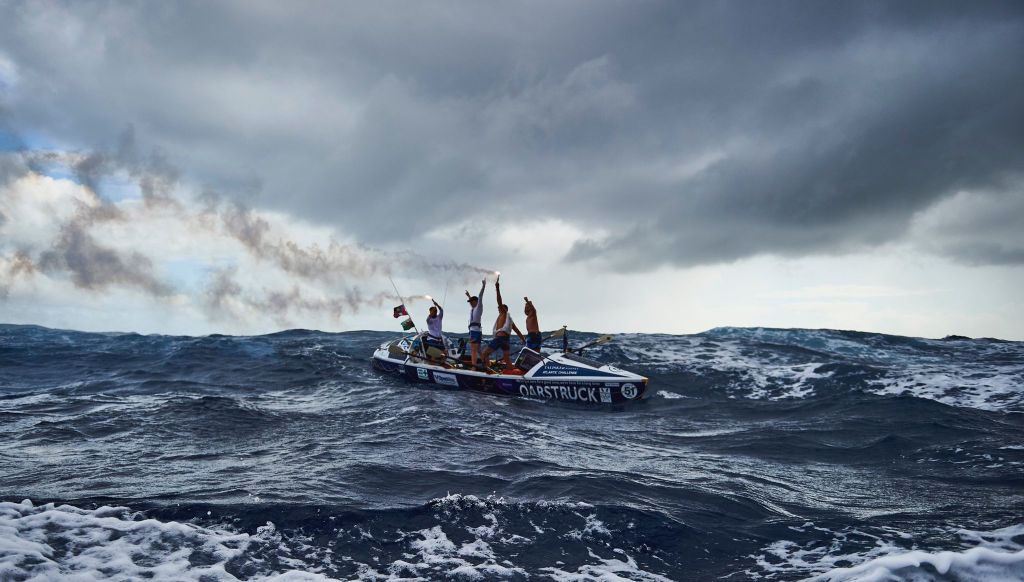
Williams described the relief he felt as the team approached Antigua but admitted it felt weird being on land again; “When you around Nelson’s dockyard and into English Harbour and this place was unbelievable with people on super yachts and people letting of flairs and you can see all of your family on the dockside and that was pretty emotional”.
“I was tripping getting off the boat and standing on something that didn’t move. I lost 10kg over the row and some people struggled getting back into normal sleeping patterns, but I started putting weight back on straight away and slept for 13 hours on my first night”.
¼ of the team, Hugo, is a Type 1 diabetic and despite Williams saying Hugo didn’t want to make it a big deal, it is a big achievement and is inspirational in showing diabetic people that their condition doesn’t have to affect what they do. The team also managed to raise around £35,000 for Diabetes UK from fundraising before and after the row.

When asked whether he’d take part in anything like this again, Williams replied; “I’d love to take part in the challenge again but I’m not sure I’m ready to put myself through the planning, training and it taking over my life again”.
 Haydn Evans